Lesotho’s economy is shaped by textiles, diamond mining, water exports, agriculture, telecommunications, and cross-border trade with South Africa. Compare the main sectors, business conditions, operating costs, and practical market-entry considerations.

Lesotho’s strongest commercial sectors are textiles and apparel, diamond mining, water infrastructure, agriculture, and telecommunications. The main trade-off is clear: export potential can be meaningful, but landlocked logistics, border processes, infrastructure needs, and sector-specific approvals can add complexity.
For investors and suppliers, the most practical opportunities often sit around established industries rather than purely consumer-facing ventures. Mining services, apparel sourcing, freight coordination, industrial facilities, payment systems, and connectivity are all areas worth assessing.
Lesotho’s close economic link with South Africa shapes transport routes, currency handling, supplier networks, and customer access. The loti is pegged at par with the South African rand, and the rand is widely accepted.
A careful market-entry plan should compare compliance obligations, local partner requirements, freight reliability, and the expected contract size before capital is committed.
The right sector depends on whether the business is selling into export operations, serving local households, supporting infrastructure, or using Lesotho as part of a regional supply chain.
Current licences, incentives, mine activity, procurement opportunities, and operating costs should always be verified directly before a decision is made.
At a Glance
- Export-oriented industries—textiles, diamonds, and water-related infrastructure—are central to Lesotho’s formal economy.
- South African access matters: transport links, border procedures, the rand-loti relationship, and regional supply chains affect most business models.
- Supplier opportunities can include mining support, factory inputs, logistics, telecom services, agricultural processing, and infrastructure procurement.
| Sector | Main Buyers or Users | Key Cost Drivers | Entry Barrier |
|---|---|---|---|
| Textiles and apparel | Export buyers, sourcing teams, regional supply chains | Factory space, labour, imported inputs, freight, customs | Production capability and buyer compliance requirements |
| Diamond mining | Mine operators and specialist contractors | Equipment, technical labour, transport, safety and compliance | High; often requires specialist capability and approved supplier status |
| Water and hydropower | Infrastructure contractors, public-sector projects, industrial users | Engineering, project delivery, equipment, permitting | High; project-based procurement and regulatory review |
| Agriculture and food processing | Households, retailers, livestock value chains, local processors | Inputs, storage, transport, weather exposure, distribution | Moderate; scale and reliable market access are important |
| Telecommunications and mobile money | Consumers, merchants, employers, service providers | Connectivity, devices, integration, customer support | Regulatory and network-partnership considerations |
What Drives Lesotho’s Economy Today?
The Short Answer: Export Industries, South African Market Access, and Resource-Based Activity
Lesotho’s economy is shaped by its position as a landlocked country surrounded by South Africa. This makes cross-border movement essential for imported machinery, production inputs, consumer goods, export shipments, and specialist service providers. Textiles and apparel, diamond mining, water exports and infrastructure, agriculture, and telecommunications all play distinct roles.
For a commercial entrant, the best opportunity is not always the largest sector. A logistics provider may find demand around factories and mines, while a smaller local operator may be better positioned in distribution, agricultural services, mobile payments, or business connectivity.
Why Location, Currency Links, and Infrastructure Shape Business Decisions
The loti is pegged at par with the South African rand, and the rand is widely accepted. This can simplify some regional transactions, but it does not remove the need to plan for border documentation, customs handling, freight lead times, and supplier terms.
Infrastructure questions should be addressed early. A business should assess transport access, electricity needs, connectivity, warehouse requirements, and the practicality of servicing customers outside major commercial areas. A low quoted input cost can become less attractive if freight, border delays, or service coverage are not properly planned.
The Main Industries and Organisations to Know
Textile and Apparel Manufacturing for Export Markets
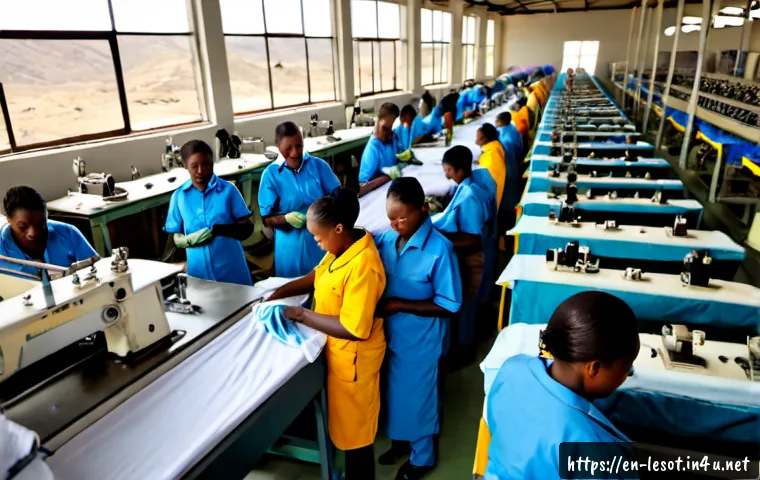
Textile and apparel manufacturing has historically been an important formal-sector employer in Lesotho. The sector is linked to international trade preferences and regional supply chains, making it relevant for apparel buyers, fabric suppliers, packaging vendors, factory service firms, and sourcing teams.
Buyers should focus on practical capacity questions: production capability, quality controls, lead-time management, input sourcing, worker availability, transport arrangements, and export documentation. Do not assume that a past trade preference or sourcing advantage applies to a current order; eligibility and commercial terms need current verification.
Diamond Mining and Specialist Mining-Service Demand
Diamond mining is a major source of export value. Large-scale operations have included the Letseng and Liqhobong diamond mines. This creates potential demand for specialist equipment, engineering support, maintenance, safety supplies, accommodation services, transport, communications, and other mine-site solutions.
Mining is usually not a simple market for a new supplier. Vendor approval processes, safety expectations, technical specifications, delivery capability, and contract terms may be significant. Current operating status, procurement schedules, ownership structures, and supplier requirements should be confirmed directly with the relevant operator or authorised procurement channel.
Water Infrastructure, Hydropower, and Cross-Border Supply
Water is one of Lesotho’s strategic economic resources. The Lesotho Highlands Water Project supplies water to South Africa and supports hydropower infrastructure. This makes water-related engineering, maintenance, monitoring, construction support, and infrastructure services commercially relevant.
These opportunities are commonly project-driven and may involve substantial compliance, technical qualifications, and procurement procedures. Suppliers should distinguish between a broad infrastructure opportunity and a live tender or approved contractor requirement. Project timelines, tender rules, and technical scope should never be assumed.
Agriculture, Livestock, and Food-Processing Opportunities
Agriculture remains important to household livelihoods, especially livestock, maize, sorghum, and small-scale farming. Commercial openings may exist in input distribution, animal-health support, storage, transport, irrigation-related services, processing, packaging, and local retail supply.
The key challenge is often consistency. Agricultural ventures should consider seasonality, access to buyers, storage conditions, rural transport, working capital, and the ability to aggregate supply. For smaller entrepreneurs, services that solve a clear local problem may be more realistic than capital-heavy farming expansion.
Telecommunications, Mobile Money, and Business Connectivity
Telecommunications and mobile money services matter for consumer access, business payments, and digital service delivery. For employers and suppliers, reliable connectivity can support customer communication, field operations, merchant payments, staff coordination, and remote service delivery.
A business telecom plan should be compared on coverage, service support, device compatibility, payment integration, and suitability for the operating location. Mobile money can be relevant for everyday transactions, but businesses should verify available commercial features and compliance requirements before relying on any platform.
Sector Comparison: Costs, Market Access, and Commercial Potential
Capital Intensity and Typical Procurement Needs
Mining and water infrastructure generally suit technically capable suppliers with larger contract capacity, formal compliance systems, and the ability to meet specialist requirements. Textile sourcing and factory support may require less engineering depth but still demand dependable quality, export documentation, and delivery performance.
Agriculture and distribution can offer more accessible entry points for local operators, though profitability may depend heavily on route density, storage, and repeat demand. Telecom-related services can be attractive where they improve payments, connectivity, or customer reach without requiring ownership of network infrastructure.
Export Routes, Customs Exposure, and Freight Considerations
Because Lesotho is surrounded by South Africa, freight planning is a business model issue, not an administrative afterthought. Imported equipment, apparel inputs, packaging, spare parts, and consumer inventory may all rely on cross-border movement. Exporters should map the full route from supplier to border to final buyer.
Compare freight providers based on border experience, cargo handling, tracking, insurance options, documentation support, and service reliability for the specific route. Customs procedures, tariffs, permits, and product rules should be checked for the exact goods involved.

Which Sectors Suit Investors, Suppliers, or Small Local Operators?
Investors may prefer sectors with identifiable industrial demand, established export links, or infrastructure relevance. International suppliers may find the clearest fit in mining services, industrial equipment, factory inputs, engineering support, and logistics. Local businesses may find more practical openings in transport coordination, retail distribution, agricultural value chains, repairs, payment-enabled services, and local business support.
The right choice depends on budget, sales cycle, contract size, technical capability, and tolerance for compliance work. A sector with high export value may still be unsuitable for a business that needs quick revenue or has limited capacity to manage procurement processes.
Practical Market-Entry Steps and Common Mistakes
Verify Licences, Local Registration, Tax, and Sector Approvals
Before trading, investing, or signing a supplier agreement, verify business registration requirements, tax treatment, import or export permissions, and sector-specific approvals. The Lesotho National Development Corporation has played a role in industrial development and investment promotion, making it a relevant point of reference for industrial and investment-related enquiries.
Legal advisers and market-entry consultants may be worth the cost when the project involves industrial land, regulated services, public procurement, mining supply, or cross-border contractual exposure.
Plan for Transport, Border Processes, Power Reliability, and Currency Handling
Build a practical operating plan around transport timing, customs documents, warehousing, power requirements, staff access, and customer payments. The loti-rand relationship can support regional commercial planning, but suppliers should still agree clearly on invoice currency, payment timing, banking arrangements, and responsibility for freight or border costs.
Avoid Relying on Outdated Trade Incentives or Unverified Partner Claims
Trade preferences, procurement opportunities, project schedules, and investment incentives can change. Treat every claim as a verification task. Ask for current registration records, relevant approvals, references where appropriate, written scope of work, and clear payment terms before committing stock, equipment, or capital.
Opportunity Paths by Business Type
For International Suppliers Serving Mines, Factories, and Infrastructure Projects
Focus on a specific operational need: maintenance supplies, communications, technical equipment, safety-related products, transport coordination, factory consumables, or engineering support. A local partner can be valuable when it improves delivery, service response, documentation, or customer access.
For Apparel Buyers and Sourcing Teams Assessing Production Capacity
Assess the supplier relationship through production capability, quality systems, input availability, shipping arrangements, and export-market requirements. Avoid evaluating a factory only on unit price. Reliable lead times and compliant documentation may matter as much as the initial quote.
For Local Entrepreneurs Targeting Services, Distribution, and Agricultural Value Chains
Look for recurring needs rather than one-off demand. Examples include local distribution, storage support, livestock-related services, farm inputs, repair services, merchant payment support, and connectivity assistance. Start with a defined customer group and confirm whether their purchasing pattern can sustain the service.
Selection Criteria and Comparison Summary
Before choosing a sector or service provider, compare contract size, capital needs, licensing burden, freight exposure, customer concentration, and time to revenue. For industrial projects, assess whether an industrial site has suitable access, utilities, and logistics links. For cross-border trade, compare logistics firms on documentation support and route experience. For daily operations, compare business telecom plans and payment tools based on practical coverage and service needs. Official guidance and detailed commercial conditions should be checked directly with the relevant provider or authority before signing.
Closing Thoughts
Lesotho offers commercial relevance through export manufacturing, diamonds, water infrastructure, agriculture, and digital connectivity. Its close relationship with South Africa creates access advantages but also makes border planning and regional logistics essential. Businesses that match their capability to a clear sector need—and verify current conditions—are better placed than those entering on broad assumptions. Strong local due diligence is often more valuable than a fast market-entry decision.
Useful Information to Know
Currency: The loti is pegged at par with the South African rand, which is also widely accepted.
Trade geography: Lesotho is surrounded by South Africa, so transport and customs planning affect many sectors.
Industrial support: The Lesotho National Development Corporation has been involved in industrial development and investment promotion.
Verification: Current mine activity, incentives, approvals, and procurement opportunities require direct confirmation.
Important Notes
This overview is intended for general market assessment. It does not confirm current operating status, ownership, financial performance, production volumes, tax terms, incentives, freight costs, licensing costs, or supplier contracts for any company or project. Obtain current legal, tax, regulatory, logistics, and commercial advice appropriate to the planned transaction.
Frequently Asked Questions
Q1. What are the biggest industries in Lesotho?
A1. Key industries and economic activities include textile and apparel manufacturing, diamond mining, water supply and hydropower infrastructure, agriculture, livestock-related activity, telecommunications, mobile money, and cross-border trade with South Africa.
Q2. Is Lesotho a suitable market for foreign investors or suppliers?
A2. It can be suitable for businesses with a clear fit in export manufacturing, mining services, infrastructure support, logistics, telecommunications, or agricultural value chains. Suitability depends on the specific sector, approvals, transport plan, customer access, and ability to manage cross-border operations.
Q3. What costs should a business assess before entering the Lesotho market?
A3. Assess registration and compliance requirements, licensing, industrial or commercial premises, electricity needs, freight, customs processes, warehousing, labour availability, telecom services, payment arrangements, and local advisory support. Exact costs depend on the business model and should be verified for the planned activity.